

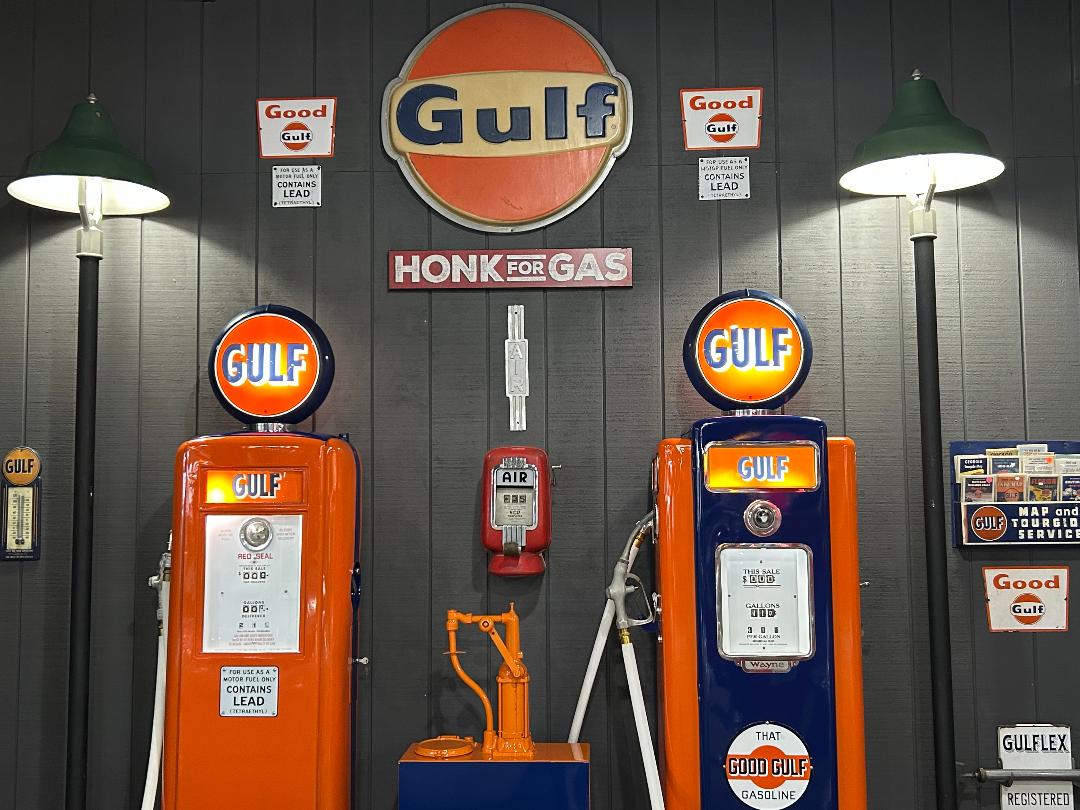
So you’re pining for the days when gas was “cheap”? Well, pine no more, my friend.
We’re enjoying some of the cheapest gas in history, even with the recent increases in what had been the artificially low Jersey gas tax.
Yes, maybe the average cost of a gallon of gas at $2.70 looks like a lot when compared to, say, the 36 cents you might have paid in 1972, the last year of supposed “cheap gas,” in the days before the various oil embargoes and shortages that began the next year.
But when inflation is taken into consideration, the 36 cent-a-gallon price of gas would be the equivalent of $2.84 today, according to inflation rates provided by the Bureau of Labor Statistics. Just about the same, if not a bit lower, price as when we were wished “Happy Motoring” as we set sail in the family land yacht to our vacation spots.
But wait. It gets better.
In 1972, that wood-paneled monster truck you motored around in was probably a mountain of metal built by Chevy or Ford, a station wagon that could hold six kids—or more—unencumbered by seat belts. That year the average mileage for the average vehicle, including cars and light trucks, according to the U.S. Energy Information Administration, was 12.1 miles per gallon. In 2025 the equivalent number was 29.4.
Yes, that’s right. Cars in general get more than twice the gas mileage than they did in the days of so-called cheap gas. So that 36 cents paid for half the mileage it pays for today. In other words, when inflation and improved mileage are taken into account, the cost of driving today is similar to buying gas for 18 cents a gallon in 1972.
Why have we been favored with such largesse at the pump?
A significant increase in availability coupled with decreased demand is the big reason, along with supply chains that have stabilized after COVID and the ongoing Russian war on Ukraine. It’s created an oversupply situation, pushing down the price of crude oil and, consequently, gasoline at the pump.
So, what’s this got to do with the price of bananas in Pittsburgh? Nothing, but there is a good comparison there. In 1972, bananas cost about 12 cents per pound. Today, they are around 70 cents a pound. The 1972 price would translate to 95 cents per pound. It’s cheaper to drive to the store than it was in ’72 and cheaper to buy a banana.
The cheapest gas so far this century was in February 2026, when the pump price dropped to as low at $1.39 during the Obama administration. My Handy Dandy CPI Calculator tells us that about $1.90 today.
It wasn’t always like that. As most of us know, there have been some serious gas spikes over the years. The highest gas ever both in actual price and comparative price was in 2008, the year we took our family on a cross-country trip. We visited Mount Rushmore, the Grand Canyon, several presidential museums, the Field of Dreams in Iowa, and the Spam Museum in Minnesota. Yes, there is such a place.
We also visited a gas station in South Dakota with a near-empty tank. It was self-service, and I mistakenly pressed the button for Super-Duper Kick-Ass-Nitro Premium. Probably at the exact minute and second gas prices peaked. That gas rang in, I saw when I was done, at close to $6 a gallon. I paid more than $140 for that tank. That would have been about $26 in 1972, when most fill-ups were about $10. OK, enough math. My brain hurts.
Enjoy the cheap gas while you can. Prices routinely start to creep up in the spring as refineries switch to summer blend fuels and demand increases. The various saber-rattling and chest-thumping taking place around the globe adds volatility. Gas prices hate saber-rattling and chest-thumping.
But in Jersey, no matter the price, you never have to get out of your car for fuel. Happy motoring!

Joe brings decades of journalism experience to the Ridge View Echo, covering everything from local school boards to the U.S. Supreme Court. A former National Law Journal editor and Columbia Law School press officer, he now enjoys telling community stories in Blairstown, where he lives with his wife, Rose, and their two dachshunds.
- Joe Phalon, Contributing Writerhttps://ridgeviewecho.com/author/joe-phalon-contributing-writer/

- Joe Phalon, Contributing Writerhttps://ridgeviewecho.com/author/joe-phalon-contributing-writer/

- Joe Phalon, Contributing Writerhttps://ridgeviewecho.com/author/joe-phalon-contributing-writer/

- Joe Phalon, Contributing Writerhttps://ridgeviewecho.com/author/joe-phalon-contributing-writer/

